
 Save to Pinterest
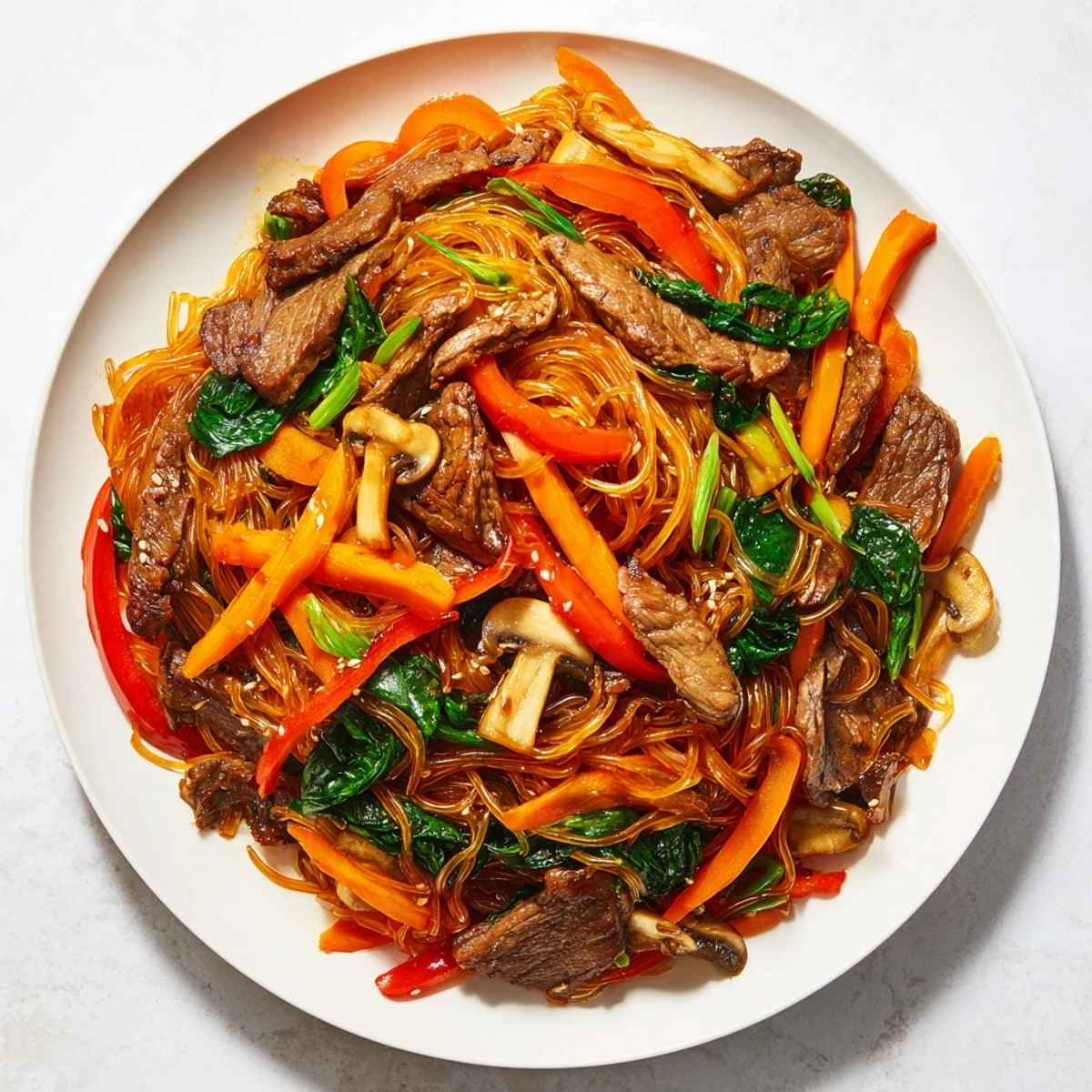
 Satisfy your cravings with these flavorful Korean-inspired noodles featuring tender marinated beef, colorful vegetables, and chewy sweet potato noodles coated in a balanced savory-sweet sauce. This dish comes together in just 40 minutes, making it perfect for busy weeknights when you want something comforting yet exciting.
The combination of gochujang, soy sauce, and brown sugar creates that distinctive Korean flavor profile—slightly sweet, gently spicy, and deeply umami. The beef stays tender from a quick marinade, while vegetables add crunch and freshness throughout every bite.
The first time I made Korean beef noodles, I accidentally bought the sweet potato glass noodles called dangmyeon, and that happy mistake completely changed how I approach stir-fry noodles forever. Their springy, slightly slippery texture holds onto that spicy-sweet sauce in a way regular noodles just cant compete with, and now I always keep a package tucked in my pantry for those nights when something warm and comforting needs to happen fast.
Last winter my sister came over feeling completely drained from work, and I threw this together while she curled up on the couch. She took one bite, closed her eyes, and said this was exactly what she didnt know she needed—its become her go-to request ever since.
Ingredients
- Beef sirloin or ribeye: Thinly slicing against the grain makes all the difference for tenderness, so ask your butcher to do it or pop it in the freezer for 20 minutes before cutting
- Sweet potato noodles (dangmyeon): These glass noodles have the most incredible chew and dont get mushy like wheat noodles might
- Gochujang: The fermented Korean chili paste brings this deep, slightly funky heat that you just cant replicate with regular chili flakes
- Fresh vegetables: The combination of crisp bell pepper, earthy mushrooms, and fresh spinach keeps things bright and balances the rich sauce
Instructions
- Get everything ready:
- Mix the beef with soy sauce, sesame oil, sugar, and minced garlic. While it sits, whisk together your sauce ingredients and slice all the vegetables.
- Cook the noodles:
- Boil them according to the package, then drain and rinse under cold water to stop the cooking and keep them from sticking together.
- Stir-fry the vegetables:
- Heat your wok until its almost smoking, then cook the carrots, peppers, and mushrooms until theyre just tender. Add spinach and green onions at the end so they wilt but dont turn to mush.
- Sear the beef:
- Give it space in the hot wok and let it develop a nice brown color before stirring—crowding the pan makes it steam instead of sear.
- Bring it all together:
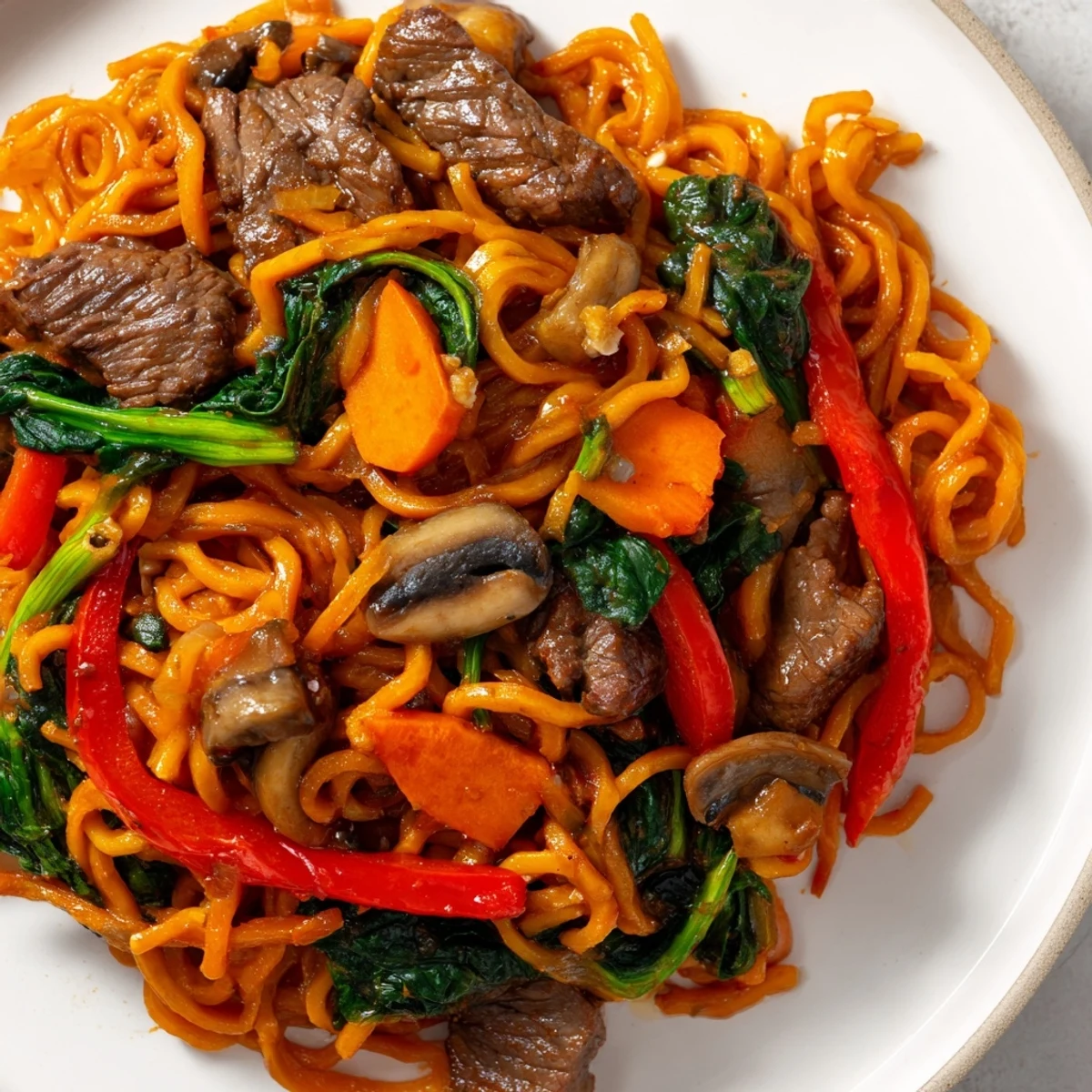
- Toss everything back into the wok, pour in that glorious sauce, and stir until the noodles are glossy and coated. The smell alone will have everyone gathering in the kitchen.
 Save to Pinterest
 My friend who swears she hates spicy food tried this and ended up scraping the bowl clean. The gochujang adds warmth rather than burn, and the brown sugar balances it perfectly so even heat-sensitive people usually love it.
Making It Your Own
Sometimes I swap in whatever vegetables are languishing in my crisper drawer—sugar snap peas work beautifully here, and zucchini adds nice bulk when I need to stretch the servings. The sauce is versatile enough that it makes almost anything taste good.
Perfecting The Noodles
If you cant find dangmyeon at your regular grocery store, check an Asian market or order online. Udon noodles work in a pinch, but they give you a completely different texture—still delicious, just not quite the same chewy satisfaction.
Serving Suggestions
I like setting out small bowls of extra gochujang and sesame seeds so people can customize their bowls. Its also fantastic with a cold beer or some chilled green tea to cut through the richness.
- Leftovers reheat surprisingly well, though the noodles will absorb more sauce overnight
- Add a fried egg on top for breakfast the next morning
- Double the sauce if you love your noodles extra glossy and flavorful
 Save to Pinterest
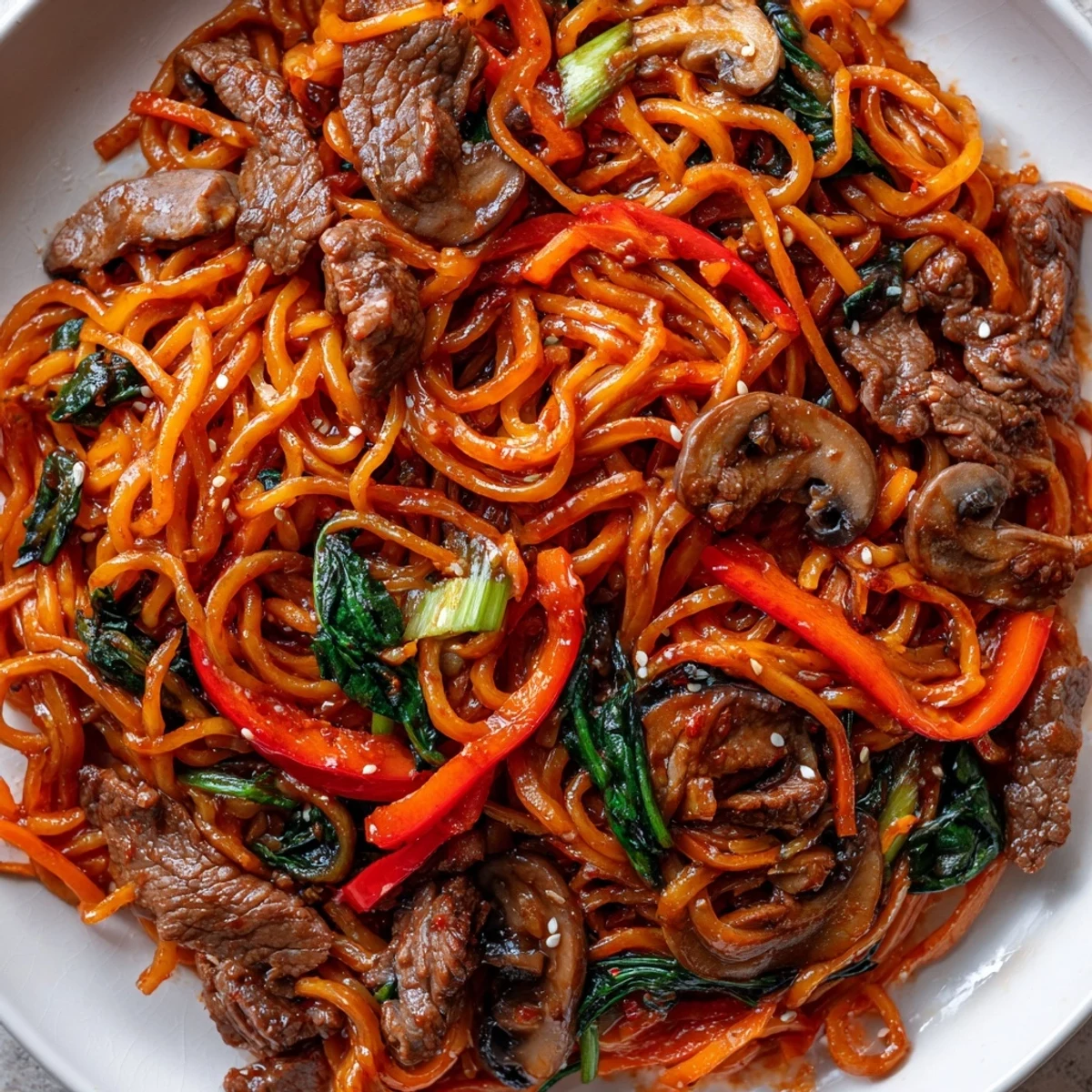
 This is one of those recipes that makes me feel like a better cook than I actually am. It comes together so effortlessly and looks so impressive in the bowl, but the truth is its just really forgiving and designed to be delicious.
Recipe FAQs
- → What type of noodles work best for this dish?
-
Korean sweet potato noodles (dangmyeon) are traditional and provide the perfect chewy texture. If unavailable, dried udon noodles or thick rice noodles work well as substitutes. Cook according to package instructions and rinse under cold water to prevent sticking.
- → Can I make this dish spicier?
-
Absolutely! Increase the gochujang to 2 tablespoons for more heat, or add Korean chili flakes (gochugaru) for additional spice intensity. You can also add sliced fresh chilies during the vegetable stir-fry stage.
- → How do I slice the beef properly for stir-frying?
-
For the most tender results, partially freeze the beef for 20-30 minutes before slicing. This makes it easier to cut thin, even strips against the grain. Sirloin or ribeye work best due to their marbling and tenderness.
- → Can I prepare the components ahead of time?
-
Yes! You can marinate the beef up to 4 hours in advance, slice the vegetables, and whisk the sauce earlier in the day. Store everything separately in the refrigerator. Cook the noodles just before assembling for the best texture.
- → What vegetables can I substitute?
-
Feel free to use zucchini, broccoli florets, snap peas, or bok choy instead of or in addition to the suggested vegetables. The key is to maintain a variety of colors and textures while ensuring all vegetables are cut into similar-sized pieces for even cooking.
- → Is this dish gluten-free?
-
The traditional version contains gluten from the noodles, soy sauce, and gochujang. To make it gluten-free, use tamari instead of soy sauce, verify your gochujang is gluten-free (some brands contain wheat), and choose gluten-free noodles like rice noodles or certified gluten-free udon.