
 Save to Pinterest
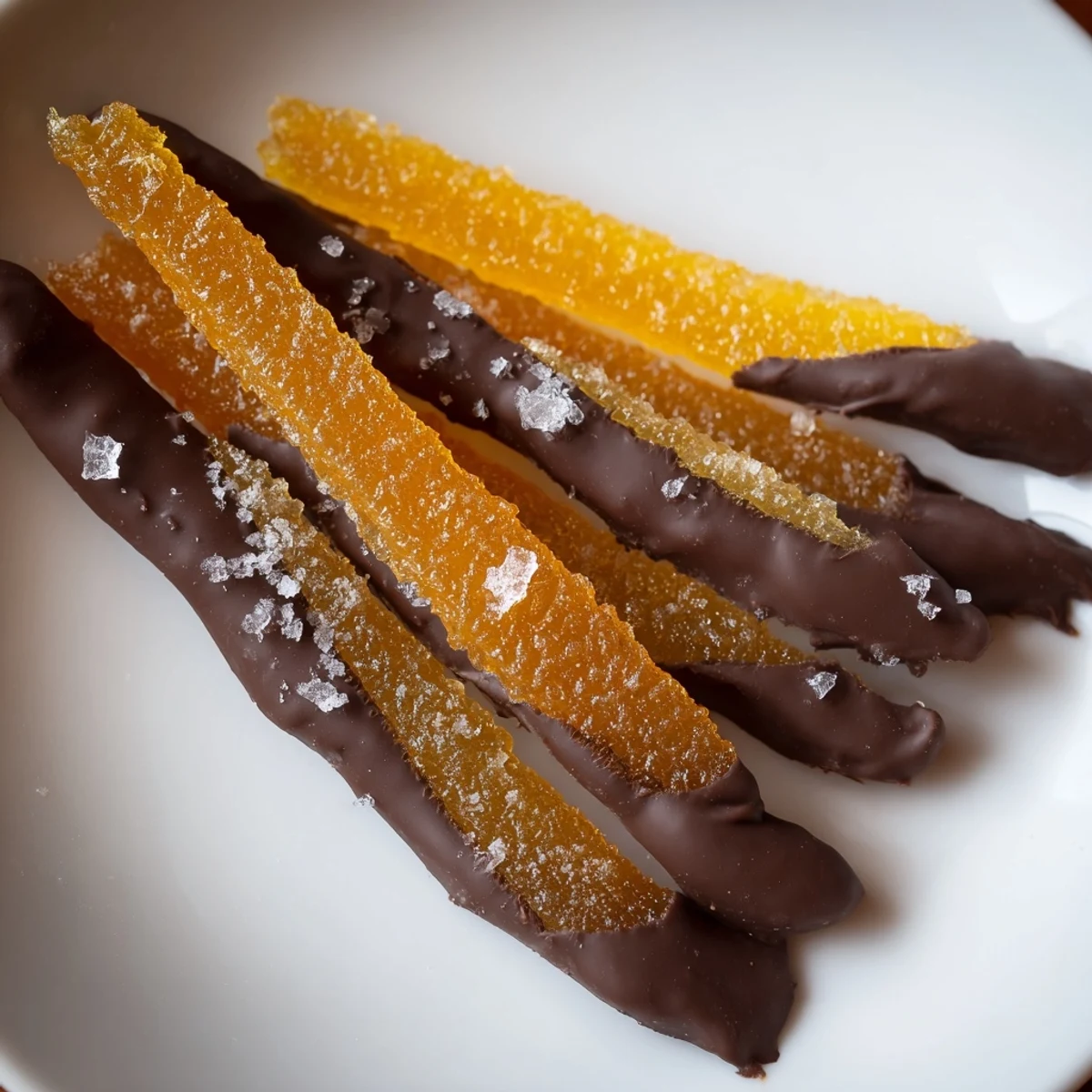
 These chocolate covered orange peels transform simple citrus into an elegant European confection. Fresh orange peels are blanched to remove bitterness, then slowly simmered in sugar syrup until beautifully translucent.
Once dried, each candied strip is dipped halfway into melted dark chocolate and finished with a touch of flaky sea salt. The result is a perfect balance of bright citrus sweetness and rich, slightly bitter chocolate.
Requiring just a few ingredients and basic kitchen tools, this medium-difficulty treat yields about 30 pieces ideal for holiday gifting, dessert platters, or everyday indulgence.
The smell of simmering orange peels will hijack your entire kitchen, and honestly, your entire afternoon, in the best way possible. My neighbor once knocked on my door convinced I was making some fancy perfume because the citrus cloud had drifted down the hallway. These chocolate dipped orange peels are the kind of project that starts as a curious experiment and ends as a full blown obsession you will revisit every holiday season.
I made a double batch one December afternoon while my niece sat on the counter, fascinated by the translucent glow the peels take on as they cook. She declared them candy jewels and proceeded to eat so many that I had to hide half the tray just to have some left for gifting. We still laugh about the chocolate smudge she left on her holiday dress.
Ingredients
- 3 large oranges: Thick skinned varieties like navel work beautifully because they give you more peel to work with and a sturdier strip after candying.
- 1 cup (200 g) granulated sugar: Standard white sugar creates a clear, jewel like syrup that lets the orange color shine through the candying process.
- 1 cup (240 ml) water: Combined with the sugar, this forms the syrup that transforms bitter raw peels into sweet, chewy ribbons.
- 200 g high quality dark chocolate (at least 60% cocoa): Do not skimp here, because cheap chocolate will seize or taste waxy and ruin all your patient candying work.
- 1 tsp flaky sea salt (optional): A tiny sprinkle on each piece adds a sophisticated crackle and balances the sweetness in a way that surprises people.
Instructions
- Prep the oranges:
- Scrub the oranges clean under running water, then score each peel from stem to navel in four even quarters and gently pry the skin away from the fruit, leaving a thin layer of white pith intact for that classic chewy texture.
- Cut into strips:
- Lay each peel flat on your board and slice it into strips roughly half a centimeter wide, trying to keep them uniform so they cook evenly.
- Blanch out the bitterness:
- Pile the strips into a saucepan, cover with cold water, bring to a rolling boil for two minutes, then drain completely, and repeat this entire process two more times until the harsh bitterness has washed away.
- Build the syrup:
- Return the empty saucepan to the stove, add the sugar and water, and stir over medium heat until you see no granules left and the liquid runs clear and glossy.
- Candy the peels:
- Slide the blanched strips into the bubbling syrup and let them simmer gently for forty minutes, stirring now and then, watching them slowly turn translucent and jewel bright.
- Let them dry:
- Fish the peels out with tongs and arrange them on a wire rack set over parchment paper, giving them at least an hour to become tacky and no longer dripping wet.
- Melt the chocolate:
- Set a heatproof bowl over a pan of barely simmering water, break the chocolate into it, and stir patiently until it melts into a smooth, glossy pool with no lumps.
- Dip and finish:
- Grasp each peel and dip it halfway into the chocolate, letting the excess drip back into the bowl, then lay it on fresh parchment and sprinkle with flaky salt before the surface sets.
 Save to Pinterest
 The real magic hit me when I tucked a small box of these into a care package for a friend going through a rough patch. She called that evening, not to say thanks, but to ask if I could teach her how to make them because she needed something to do with her hands that weekend.
Getting the Blanching Right
Three rounds of boiling and draining sounds tedious, but each round pulls out a layer of bitterness that would otherwise make the finished candies unpleasant. You will notice the water becoming less yellow and harsh with each pass, which is exactly what you want.
Choosing Your Chocolate
Anything below 60 percent cocoa will be too sweet against the already candied peel, and the snap will be soft and disappointing. Spend a little extra on a bar you would happily eat on its own, because the chocolate carries half the flavor.
Storing and Gifting
Keep them in a single layer in an airtight container at room temperature and they will stay perfect for up to two weeks. Layering them with parchment prevents the chocolate from sticking and smudging.
- A small tin lined with tissue paper makes these look like a boutique gift.
- Try grapefruit or lemon peels using the exact same method for a surprising twist.
- Always double check your chocolate label if you are sharing with someone who has allergies.
 Save to Pinterest
 Once you have made these once, you will find yourself hoarding orange peels and plotting gift baskets all year long. They are proof that a little patience and a few humble ingredients can create something truly extraordinary.
Recipe FAQs
- → How do I reduce bitterness in orange peels before candying?
-
Blanching is key to removing bitterness. Place the orange peels in cold water, bring to a boil, then drain. Repeat this process two to three times. Each blanching round draws out more of the bitter compounds from the white pith, resulting in a cleaner, sweeter final product.
- → What type of chocolate works best for dipping?
-
High-quality dark chocolate with at least 60% cocoa content provides the best flavor contrast against the sweet candied peels. Tempering the chocolate before dipping creates a glossy finish and satisfying snap, though melting it gently works well for home preparation.
- → How long do chocolate covered orange peels stay fresh?
-
Store them in an airtight container at room temperature and they will keep well for up to two weeks. Avoid refrigerating them as moisture can cause the chocolate to bloom and the candied peels to become sticky. Layer them between sheets of parchment paper to prevent sticking.
- → Can I use other types of citrus for this confection?
-
Grapefruit and lemon peels work beautifully as alternatives, each offering a unique flavor profile. Grapefruit provides a more pronounced bitterness balanced by the chocolate, while lemon yields a brighter, more delicate result. Adjust blanching times accordingly.
- → Why are my candied peels not becoming translucent?
-
Translucency requires patience during the simmering stage. Maintain a gentle simmer rather than a rolling boil, and allow a full 40 minutes for the sugar syrup to penetrate the peels completely. Skimping on time or using too high heat prevents proper candying.