 Save to Pinterest
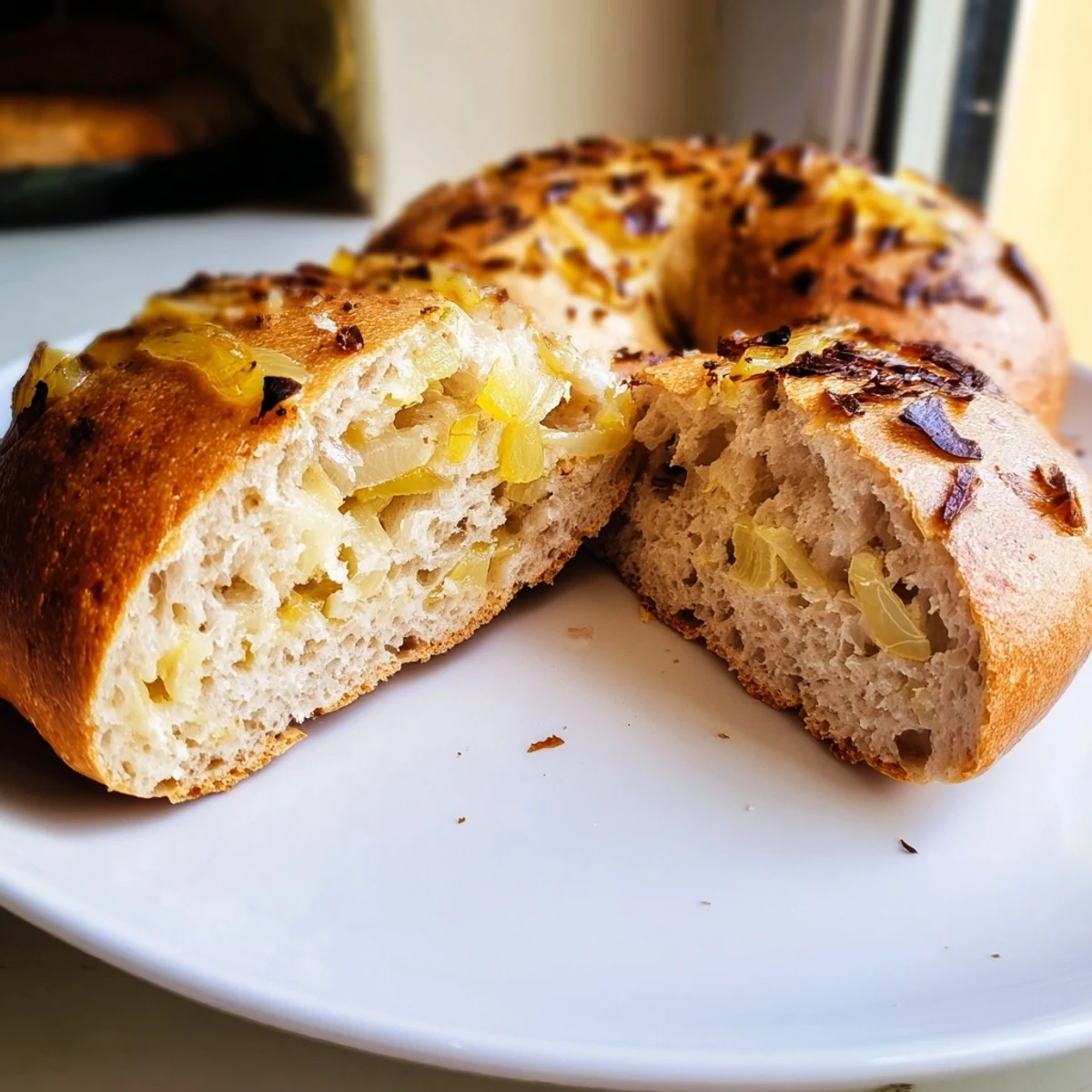
 These homemade bagels combine the tangy complexity of naturally fermented sourdough with the rich sweetness of slowly caramelized onions. The overnight fermentation develops deep flavor while creating that signature chewy texture bakery enthusiasts love. Each bagel gets a quick boil before baking, ensuring the ideal crisp exterior and tender interior.
The process requires some planning ahead—expect about 13 hours from start to finish, though most of that time is hands-off fermentation. The result is eight golden, onion-studded rings that elevate any morning routine. Toast them up and spread with cream cheese for the ultimate experience.
My kitchen smelled like sweet onions for three days straight after I first attempted these bagels. My roommate kept poking her head in, wondering what on earth I was doing that required so much patience. The truth was, I had completely fallen in love with the idea of sourdough meeting the classic everything bagel, and once those onions started caramelizing, I knew there was no turning back.
Last winter, when my sister visited during that snowstorm that kept us trapped inside for three days, I made batch after batch of these. She ate them warm, straight from the cooling rack, with butter melting into every cranny. We sat at the kitchen table for hours, watching snow pile up against the windows, eating bagels and drinking coffee while the house filled with that incredible bread smell.
Ingredients
- Sourdough Starter: An active starter that has been fed within the last 8 hours gives the best rise and flavor development
- Bread Flour: The higher protein content creates that signature chewy bagel texture that regular flour cannot achieve
- Whole Wheat Flour: Just a quarter cup adds nutty depth and helps the dough develop better structure
- Warm Water: Should feel comfortable to the touch, about 80°F, to activate the starter without killing it
- Honey: This feeds the sourdough and adds a subtle sweetness that balances the tang
- Fine Sea Salt: Fine salt distributes evenly throughout the dough, avoiding salty pockets
- Yellow Onion: Yellow onions caramelize beautifully, becoming sweeter than red or white varieties
- Olive Oil: Helps the onions cook evenly without burning, developing those deep brown edges
- Barley Malt Syrup: This is the secret ingredient that gives bagels their professional shine and chewy crust
Instructions
- Caramelize the Onions:
- Heat olive oil in a skillet over medium low heat, add the sliced onions with salt, and let them slowly transform into deep brown, jammy strands, stirring occasionally to prevent sticking.
- Mix the Dough Base:
- Whisk the starter, warm water, and honey until fully dissolved, creating a milky mixture that will bind everything together.
- Build the Dough:
- Add both flours and salt, mixing until a rough dough forms, then turn onto a floured surface and knead for 8 to 10 minutes until the dough feels smooth and springs back when pressed.
- First Rise:
- Place the dough in an oiled bowl, cover with a damp towel, and let it rest at room temperature for 4 to 6 hours until it has doubled in size.
- Shape the Bagels:
- Divide the dough into 8 equal pieces, roll each into a tight ball, then poke a finger through the center and stretch gently to create a 2 inch hole.
- Proof and Rest:
- Arrange the bagels on a parchment lined baking sheet, cover loosely, let proof at room temperature for 1 hour, then refrigerate overnight for 8 to 12 hours.
- Prep for Boiling:
- Preheat your oven to 425°F and bring 2 liters of water with barley malt syrup to a gentle boil in a large saucepan.
- Boil for Chew:
- Carefully lower each chilled bagel into the boiling water, cooking for 45 seconds per side before removing with a slotted spoon.
- Top and Bake:
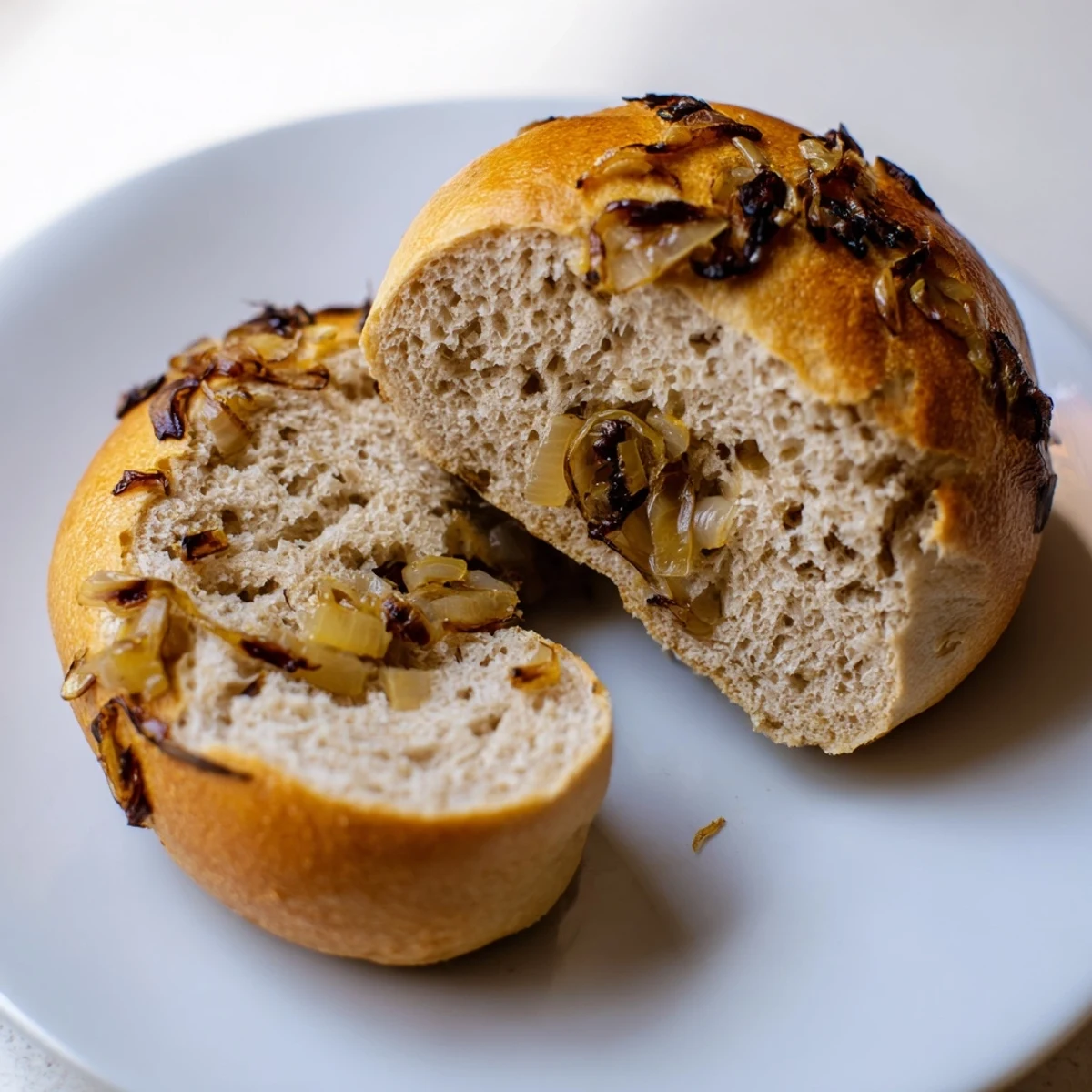
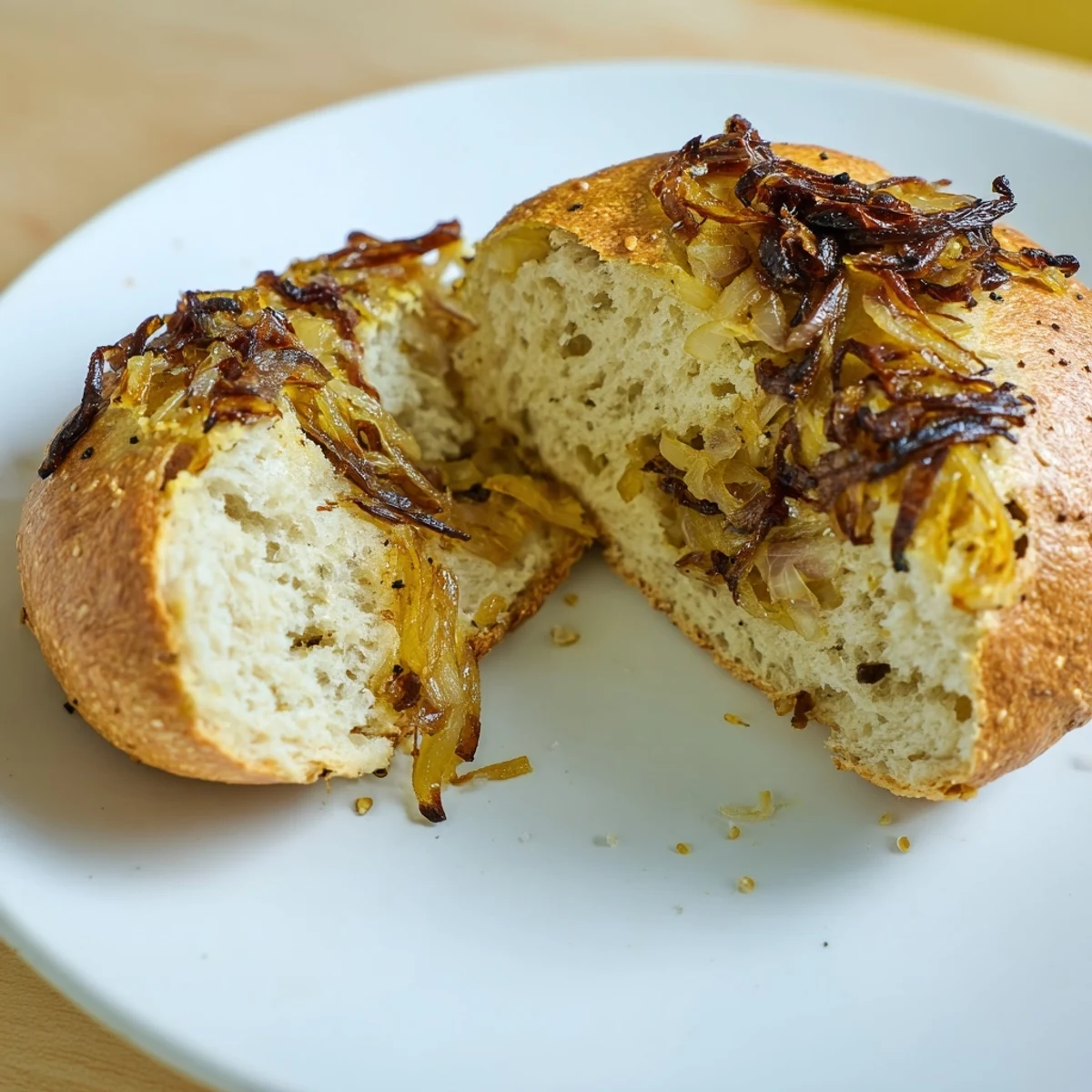
- Return boiled bagels to the baking sheet, press caramelized onions onto the tops, and bake for 20 to 25 minutes until deeply golden and crisp.
- Cool Properly:
- Let the bagels cool completely on a wire rack, where they will finish developing their texture and become easier to slice.
 Save to Pinterest
 These have become my Saturday morning tradition, the house filling with that onion aroma while coffee brews and friends start knocking on the door, drawn by the smell. Something about breaking bread, especially bread you have waited 13 hours to make, makes conversation flow easier.
Making Them Ahead
I often shape the bagels in the evening and let them do their overnight proof in the fridge, which means fresh baked bagels are possible even on busy weekday mornings. The cold fermentation actually improves the flavor, making them worth the planning ahead.
Freezing Instructions
Once the bagels have cooled completely, slice them in half and wrap each one individually in plastic wrap before placing them in a freezer bag. They will keep for up to a month, and I pop frozen halves directly into the toaster without any thawing needed.
Serving Suggestions
While cream cheese is classic, I have discovered that these onion bagels are exceptional with goat cheese and fresh chives, or even toasted and topped with a fried egg. The sweetness of the caramelized onions pairs beautifully with both savory and creamy elements.
- Avoid topping with anything too sweet, as the onions already provide that element
- Try them with hummus and cucumber for a lighter lunch option
- Leftover bagels make incredible bread pudding cubes
 Save to Pinterest
 There is something deeply satisfying about food that rewards patience, and these bagels have taught me that the best things really do come to those who wait. Happy baking, and may your kitchen always smell like caramelized onions.
Recipe FAQs
- → Can I skip the overnight refrigeration?
-
The cold proof is essential for proper flavor development and texture. Skipping it results in bagels that are less chewy and lack the characteristic sourdough tang. Plan ahead for best results.
- → What if I don't have barley malt syrup?
-
Honey works perfectly as a substitute in both the dough and boiling liquid. The syrup adds subtle sweetness and helps achieve that glossy bagel exterior, but honey performs the same function.
- → How do I know when my onions are properly caramelized?
-
Onions should turn deep golden brown and smell noticeably sweet. This takes 20-25 minutes over medium-low heat. Rushing this step over high heat will burn rather than caramelize them.
- → Can I freeze these bagels?
-
Absolutely. Slice them first, then freeze in an airtight bag for up to one month. Toast directly from frozen—no need to thaw beforehand. They reheat beautifully in a toaster.
- → Why is the boiling step necessary?
-
Boiling gelatinizes the surface starch, creating that distinctive chewy bagel texture and shiny crust. The 45-second per side timing is ideal—too short and texture suffers, too long and they become dense.