 Save to Pinterest
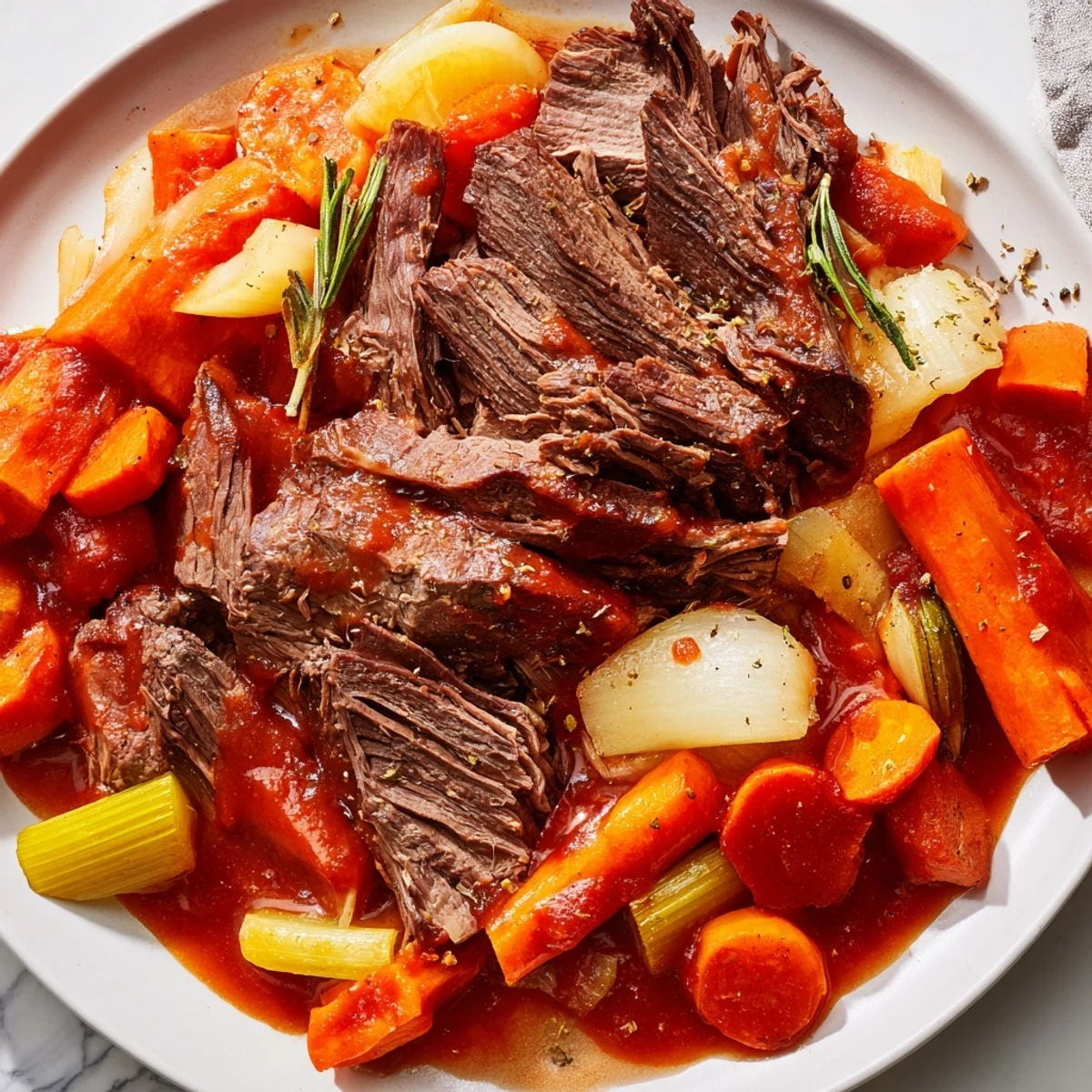
 This classic American pot roast features a seasoned beef chuck seared to a deep brown crust, then braised low and slow in a Dutch oven with carrots, celery, onion, garlic, and tomato paste.
Red wine and beef broth create a rich, savory cooking liquid that tenderizes the meat over three hours in the oven. Thyme, rosemary, and bay leaves infuse everything with earthy, aromatic flavor.
The result is fork-tender beef that slices or shreds easily, served alongside soft vegetables and spooned with pan juices. It's a comforting, gluten-free main course perfect for Sunday family dinners.
The smell of a pot roast filling the house on a rainy Sunday is the kind of thing that makes you slow down whether you want to or not. I learned this dish from watching my neighbor Margie across the fence, her kitchen window steaming up while she told me the secret was patience and a cheap cut of meat. She was right on both counts, and Ive never looked at chuck roast the same way since.
One winter I made this for a friend who had just moved into a drafty apartment with a broken heater. She sat on the floor eating it straight from a bowl wrapped in a blanket and told me it was the warmest shed been all week.
Ingredients
- Beef chuck roast (3 to 4 lbs): This marbled, affordable cut transforms during the long braise into something impossibly tender and deeply flavored.
- Carrots (3 large, peeled and cut into large pieces): They hold their shape during the slow cook and turn sweet and savory at the same time.
- Celery (3 stalks, cut into chunks): Celery builds the aromatic backbone quietly, doing important work you barely notice in the final dish.
- Yellow onion (1 large, quartered): Onion caramelizes in the beef drippings and forms the flavor base for everything that follows.
- Garlic (3 to 4 cloves, smashed): Smashed rather than minced so it mellows and sweetens without dissolving completely.
- Beef broth (2 cups): Use a good quality brand you would actually enjoy drinking, because the reduction concentrates every bit of its flavor.
- Dry red wine (1 cup, optional): A Cabernet or Merlot adds depth you simply cannot get from broth alone, but extra broth works if you prefer to skip it.
- Tomato paste (2 tablespoons): This small amount adds umami richness and helps the sauce develop a deep, beautiful color.
- Kosher salt (2 teaspoons): Seasoning the roast well before searing builds flavor from the very first step.
- Black pepper (1 teaspoon, freshly ground): Freshly cracked pepper gives a gentle heat that pre ground simply cannot match.
- Dried thyme (1 teaspoon): Thyme and beef are a natural pairing, earthy and warm without overpowering the sauce.
- Fresh rosemary (2 sprigs): Whole sprigs steep in the broth and get discarded before serving, leaving behind a subtle piney aroma.
- Bay leaves (2): These quietly deepen the broth during the long braise and should always be removed before serving.
- Olive oil (2 tablespoons): Just enough to get a hard sear on the meat without burning.
Instructions
- Preheat and prep:
- Set your oven to 300 degrees Fahrenheit and give it time to come fully to temperature while you prepare the roast.
- Season the roast:
- Pat the chuck roast thoroughly dry with paper towels, then coat all sides generously with salt and pepper so every inch is covered.
- Sear hard and deep:
- Heat olive oil in your Dutch oven over medium high heat until it shimmers, then lay the roast in and do not move it for four to five minutes per side until you get a dark, almost crusty brown.
- Build the vegetable base:
- Transfer the roast to a plate and add the onions, carrots, and celery to the same pot, stirring them around in the leftover beef fat until they pick up some color.
- Add garlic and tomato paste:
- Stir in the smashed garlic and tomato paste for about a minute until everything smells deeply savory and slightly sweet.
- Deglaze the pot:
- Pour in the red wine and scrape up every last browned bit from the bottom of the pot, letting it simmer for two to three minutes until it reduces slightly.
- Braise low and slow:
- Nestle the roast back into the pot, pour in the broth, tuck in the thyme, rosemary, and bay leaves, bring it to a simmer on the stove, then cover tightly and slide it into the oven for three hours.
- Rest and serve:
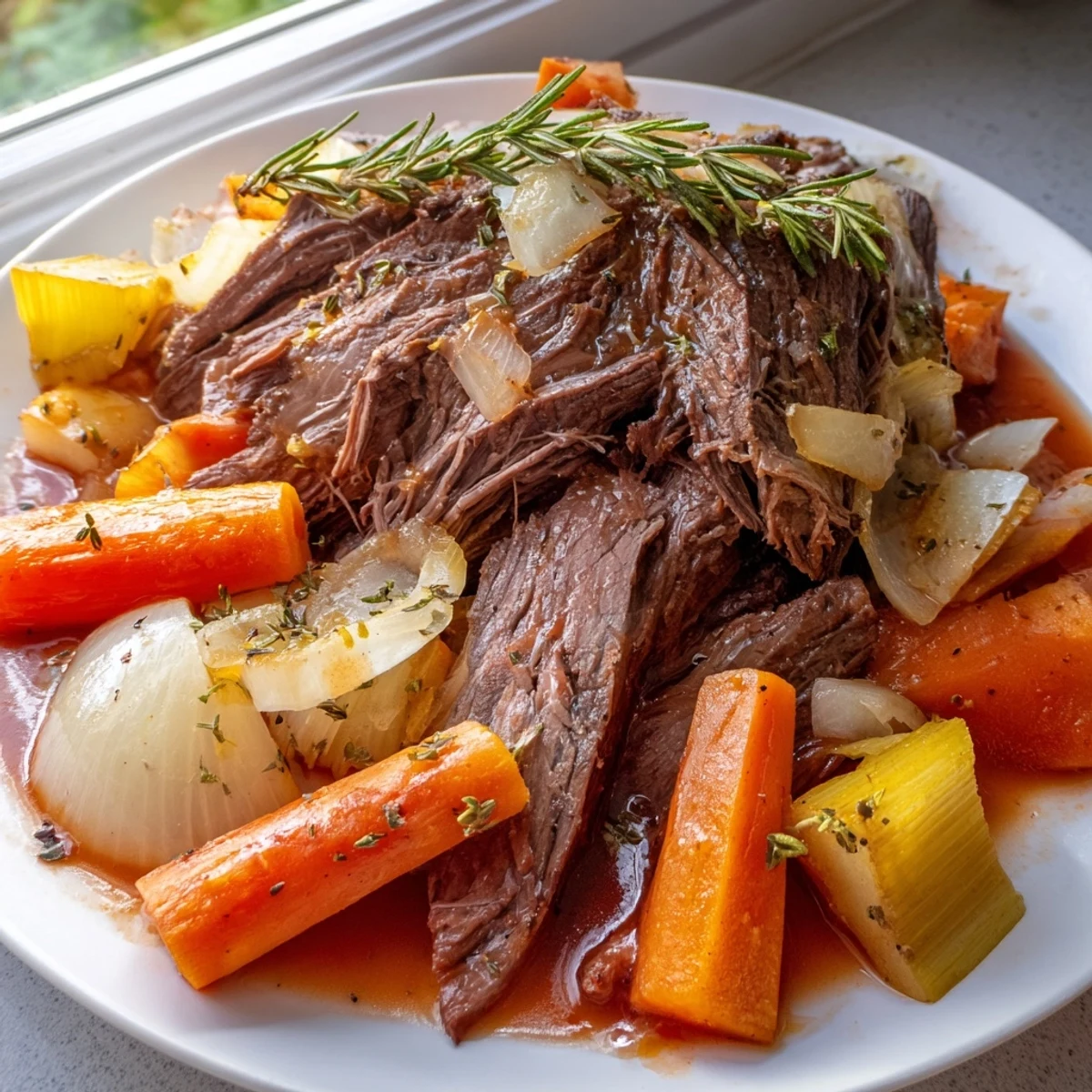
- Pull the pot from the oven, fish out the bay leaves and herb stems, then slice or shred the beef and ladle everything over with the pan juices and vegetables.
 Save to Pinterest
 The first time I pulled this out of the oven and lifted the lid, the steam carried such a rich, savory perfume that my dog appeared from the other room and sat obediently at my feet for the first time in his life.
What to Serve Alongside It
Mashed potatoes are the obvious and correct answer here, because they give you something to soak up all those incredible pan juices. Egg noodles or crusty bread also do the job beautifully if you want to keep things simple.
Leftovers Are the Real Prize
Shred whatever beef remains and tuck it into a sandwich with horseradish cream the next day, or drop it into a soup pot with the leftover vegetables and broth for the fastest homemade soup you will ever make.
Picking the Right Wine
Use something you would actually drink, because the flavor concentrates as it cooks and any harshness in the wine will only intensify. A Cabernet Sauvignon or Merlot works perfectly here.
- If you skip the wine entirely, add an extra half cup of broth and a tablespoon of balsamic vinegar for depth.
- Parsnips or small potatoes tossed in with the carrots are a welcome addition if you want a heartier one pot meal.
- Always double check that your beef broth is certified gluten free if that matters to you.
 Save to Pinterest
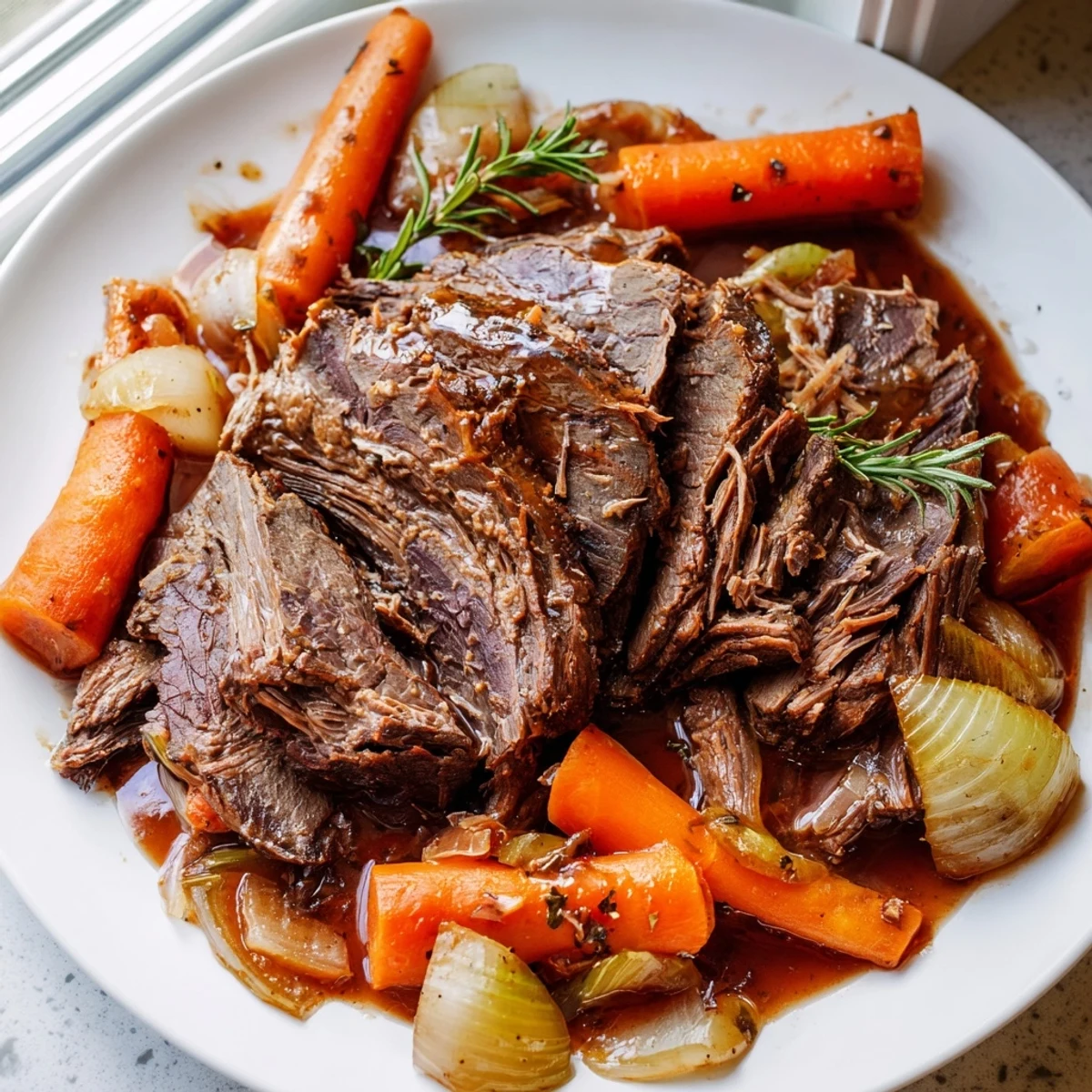
 Some meals feed people and some meals feed the whole room, and this pot roast is absolutely the second kind. Make it once and it will become part of your cold weather rotation without even trying.
Recipe FAQs
- → What cut of beef works best for pot roast?
-
Beef chuck roast is ideal because its marbling and connective tissue break down during slow braising, resulting in tender, flavorful meat. Brisket or round roast can also work but may not be as fork-tender.
- → Can I make pot roast without red wine?
-
Yes, simply substitute the wine with an equal amount of additional beef broth. The dish will still develop deep flavor from the tomato paste, herbs, and caramelized vegetables.
- → Why do I need to sear the roast before braising?
-
Searing creates a Maillard reaction that builds a flavorful browned crust on the meat. Those caramelized bits also transfer to the pot, enriching the braising liquid with deeper, more complex flavor.
- → Can I add potatoes to this pot roast?
-
Absolutely. Add quartered Yukon Gold or red potatoes during the last hour of cooking so they become tender without turning mushy. Parsnips are another excellent addition for extra sweetness.
- → How should I store and reheat leftovers?
-
Store sliced or shredded beef with vegetables and pan juices in an airtight container in the refrigerator for up to 4 days. Reheat gently in a covered pot over low heat on the stove, adding a splash of broth if needed.
- → What temperature should pot roast be cooked to?
-
For optimal fork-tenderness, the internal temperature should reach around 200°F (93°C). At this point, the collagen has fully broken down, making the meat easy to shred or slice.